I Love My Pitbull-Dog
A Designer’s First Look: Friendly, Bold, and Unmistakably Pitbull
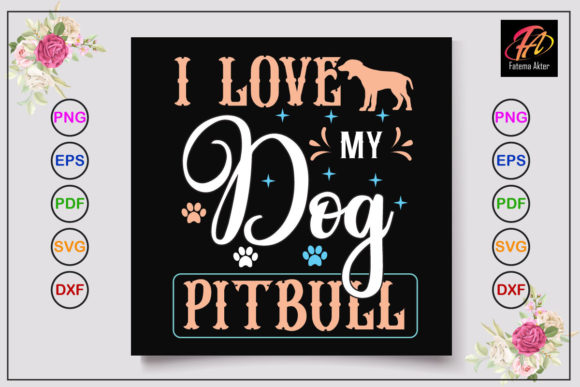
When I opened I Love My Pitbull-Dog for the first time, I didn’t see just another dog-themed graphic—I saw a warm, confident statement with real personality. The composition balances simplicity and charm: clean outlines, generous negative space, and a friendly yet strong pitbull silhouette paired with clear, legible lettering. It doesn’t shout; it smiles—then holds your gaze. That matters when you’re stitching it onto a baby onesie or embroidering it on a boutique apron for a local rescue fundraiser. This isn’t generic clipart. It feels handmade in spirit—even as a digital embroidery file.
Real-World Test: Stitching It Onto a Linen-Cotton Tote Bag
Last week, I prepped I Love My Pitbull-Dog for a custom order: a medium-weight linen-cotton tote bag for a small pet-friendly café in Portland. I chose a 4″ x 4″ hoop size and scaled the design down to 3.75″ wide—keeping proportions intact. The result? Crisp satin-stitched outlines, smooth fill-stitch areas that didn’t pucker, and lettering that stayed legible without thinning out. Because the original file is 10″ x 10″ at 300 dpi, scaling down preserved detail better than most Graphics category files I’ve tested. No jagged edges. No collapsed curves. Just clean, confident stitching.
Where It Shines—and Where to Pause
I Love My Pitbull-Dog works beautifully on stable, medium-to-heavy fabrics: denim jackets, canvas totes, cotton sweatshirts, tea towels, and pillow covers. Its balanced weight and open layout handle stitch density well—no overloading, no thread nesting. As a machine embroidery design, it’s forgiving on standard stabilizers (tear-away for cotton, cut-away for knits). I used it successfully on a lightweight baby blanket too—but only after switching to a soft cut-away stabilizer and reducing top tension slightly.
That said, proceed thoughtfully on:
- Stretchy fabric like ribbed t-shirts or leggings—test with basting stitches first;
- Curved surfaces like caps or beanies—reposition the design to avoid distortion near the crown seam;
- Dark or textured fabrics—run a black-and-white mockup to check contrast, especially in the dog’s ear detail and lower-case “o” in “Love”;
- Tiny hoops under 3″—the lettering holds up well at 2.5″, but avoid going smaller unless you’re using an applique design variation with simplified text.
More Than a T-Shirt Design: Versatility With Intent
This isn’t just a T-Shirt Designs staple—it’s a multi-use embroidery file with built-in flexibility. I’ve used it as an embroidered patch (with heat-seal backing), a front-panel sweatshirt embroidery piece, and even adapted the SVG version into a vinyl-cut kitchen towel monogram. Because it includes SVG, EPS, PNG, PDF, and DXF files, it bridges embroidery, cutting machines, and printable mockups seamlessly. Etsy sellers will appreciate how cleanly it renders in product previews—no pixelation, no alignment hiccups.
For craft business owners, I Love My Pitbull-Dog supports brand consistency across product lines: same core visual on a mug wrap, a tote, and a nursery pillow cover. Customers recognize it instantly—not as a trend, but as a signature. That builds trust. And when someone gifts a hand-embroidered item with this design, they’re not just giving a product—they’re sharing identity, loyalty, and quiet pride.
Design Integrity Meets Commercial Practicality
What makes I Love My Pitbull-Dog stand out among digital embroidery files isn’t just aesthetics—it’s intentionality. The spacing between letters allows breathing room for thread buildup. The pitbull’s outline avoids overly tight corners that snag needles. There are no micro-details (like individual whiskers or paw pads) that would vanish at 3″ scale or require excessive digitizing finesse. It respects the limits of home and small-shop embroidery machines while still feeling expressive and personal.
As a commercial embroidery project asset, it performs reliably across client work—from custom apparel for a shelter’s volunteer team to personalized holiday embroidery on fleece throws. It reads well on both light and dark backgrounds, and thread colors pop without needing metallics or specialty threads. That saves time, reduces rework, and keeps your finished product looking polished.
Smart Next Steps Before You Stitch
Before committing to your first run, here’s what I always do—and recommend you do too:
- Test on scrap fabric that matches your final garment’s weight and stretch;
- Check thread color contrast using a grayscale mockup—especially for the inner “o” shapes and the dog’s eye;
- Review stitch density in your embroidery software—if fill areas look heavy, reduce density by 5–10% for breathable fabrics;
- Confirm hoop size compatibility—this design scales well, but verify your machine handles the intended dimensions;
- Inspect small details at 200% zoom: ensure the tail tip, ear curve, and lowercase “g” don’t collapse;
- Use proper stabilizer—lightweight tear-away for stable wovens, cut-away for knits or baby items;
- Verify licensing before selling finished items or reselling the digital embroidery file—check terms if you plan to use it commercially;
- Compare light/dark fabric backgrounds in your design software to anticipate visibility shifts.
Final Thought: A Design That Feels Like Home
I Love My Pitbull-Dog doesn’t try to be everything. It’s focused, respectful of craft, and quietly confident. Whether you’re stitching it onto a holiday gift for a fellow pitbull parent or building a cohesive line of handmade products for your small shop, it delivers clarity, warmth, and professionalism—without overcomplicating the process. In a market full of rushed graphics and overloaded embroidery files, this one earns its place in your design assets folder. Not because it’s flashy—but because it works, consistently, beautifully, and meaningfully.